Crawl space repair in Columbus runs $1,500–$8,000: from sistering softened joists to replacing girders on new supports. Between the region's brutal humidity calendar and the IRC's heaviest termite zone, compromised framing is the metro's most common structural finding, and usually a joint project between decay and insects.
How the long humid season becomes floor problems, what repairs involve, and the honest pairing with prevention.
How the damage pattern runs here
Decay fungi need sustained moisture, and vented metro crawls provide it: humid summers condensing on cool framing through three seasons, storm water at the footing line, and ground vapor rising between rains. Damage concentrates where moisture does: sills and band joists at the vented walls, joist ends in the dampest bays, subfloor under decades-old bathroom leaks. Termites and boring beetles follow the soft wood. It advances quietly for years, then one spring the hallway bounces.
The repair kit
- Sistered joists: new lumber through-bolted beside weakened members
- Girder and beam replacement where decay has gone all the way through
- Sill and band-joist reconstruction at the vented walls, which condense hardest and fail first
- Adjustable steel supports on proper footings, relevelling gradually rather than in one lift
- Subfloor sections under kitchens and bathrooms
The line that comes up most often here is the third. Nine months of warm, humid air moving through a vent lands on the nearest cool timber, and in a mill-village or mid-century crawl that is the sill and the band joist. It is also the member a homeowner never sees.
Ask for every stage to be photographed, before, during and after, because work you cannot see deserves evidence you can.
Fix the wood, then retire the water
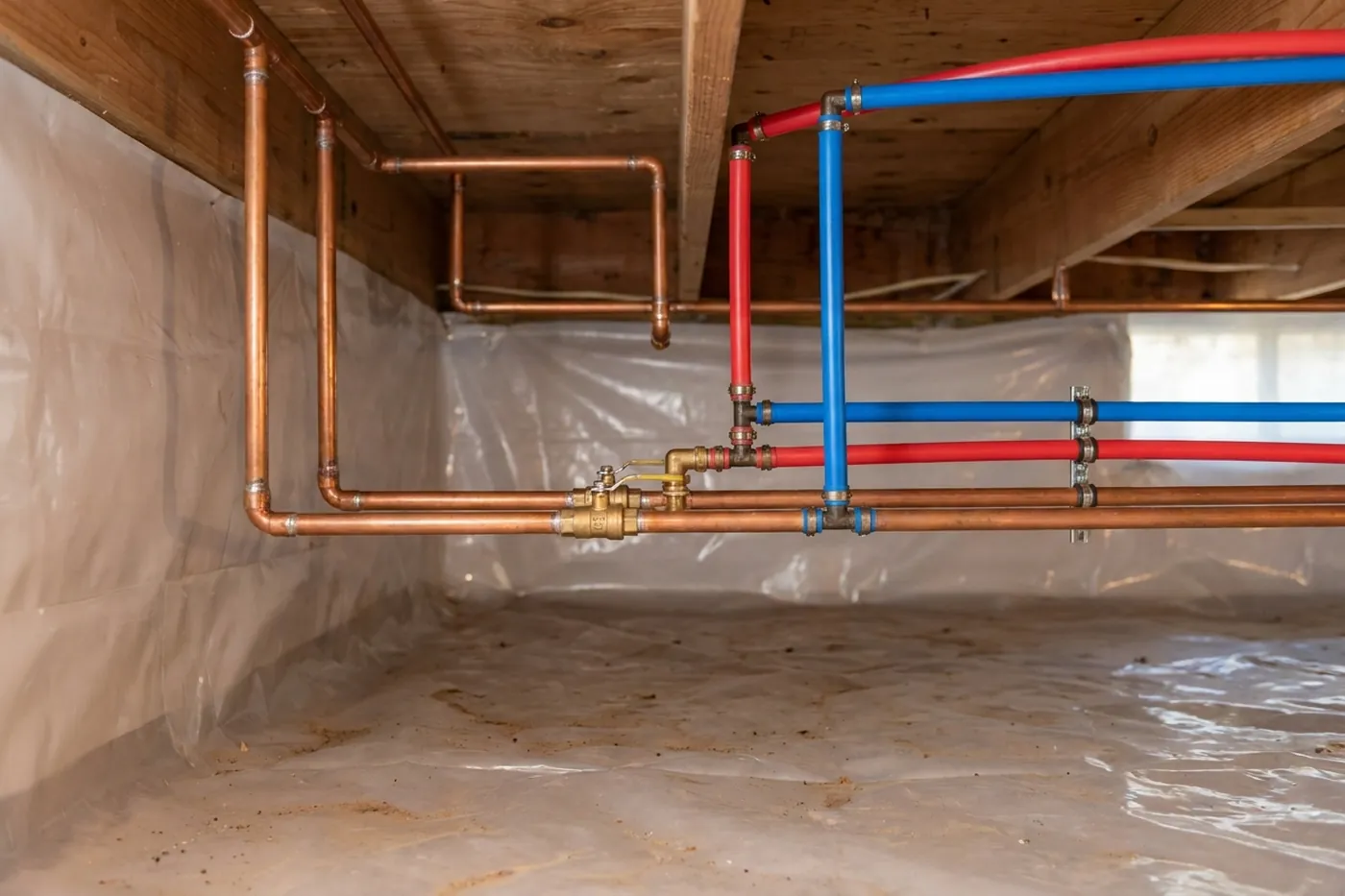
Repair restores strength. What the crawl does next decides how long it keeps it, and in a climate with no real drying season that is not a small question.
So a sound repair quote carries the moisture plan alongside it (a ground barrier through to the full sealed system) matched to your readings and staged to your budget. Where the damage turns out to be insect rather than decay, the sequence changes, and a good specialist says so before pricing either half.
What is actually broken down there?
Most calls here start with a floor that gives slightly underfoot, or a musty smell that arrives with the cooling season. Columbus sits in the heaviest termite-probability zone the residential code recognises, so what looks like moisture damage is worth opening up before anyone prices a repair.
| Option | What it does | What it means here |
|---|---|---|
| Moisture only | Humidity and ground damp, with sound framing | The long humid cooling season keeps wood damp enough to stay attractive to insects |
| Wood damage | Rot or insect damage in joists, sills or subfloor | Damp crawl wood is an open invitation here: rot and termite damage often arrive together |
| Structural sag | Failed piers, shimmed posts, a bouncing floor above | Mill-village homes on original piers are the common case, not the exception |
| Water intrusion | Standing water or a flow path through the crawl | Fall-line ground meets the river; standing water is a drainage problem, not a liner one |
Opening up before quoting matters more in this market than most. Damage that reads as rot is often two problems, and a liner over insect-damaged framing solves neither.
Frequently asked questions
What do crawl space repairs cost in the metro?
Sistered joists from about $1,500; girder replacement with new supports to $8,000. For railroad-era homes with hand-sized framing, ask for member-by-member pricing, itemized in the written quote.
Why do older Columbus neighborhoods have so much sill damage?
Time, venting, and the season length. Historic-district and mill-village homes have breathed nine-month humid seasons through their crawls for a century: sills and joist ends nearest the vents condense first, soften first, and attract attention from below first.
Can termite and decay damage be told apart?
Usually, and it matters: decay softens broadly where moisture sits; termite galleries hollow wood that can look sound outside. A good inspection photographs both patterns, and repairs should coordinate with your pest company's treatment when insects are part of the story.
Do repairs come with the moisture fix?
They should be priced beside it. Repaired framing under an unfixed crawl is a countdown; ask for a quote that pairs the structural lines with the moisture plan so you see the whole picture and stage it your way.
Get a Columbus crawl space inspection
Tell us what you're noticing (smells, humidity, floor bounce, a wet crawl) and we'll pass your request to one independent local specialist who serves Columbus. They call you back to set up an inspection.