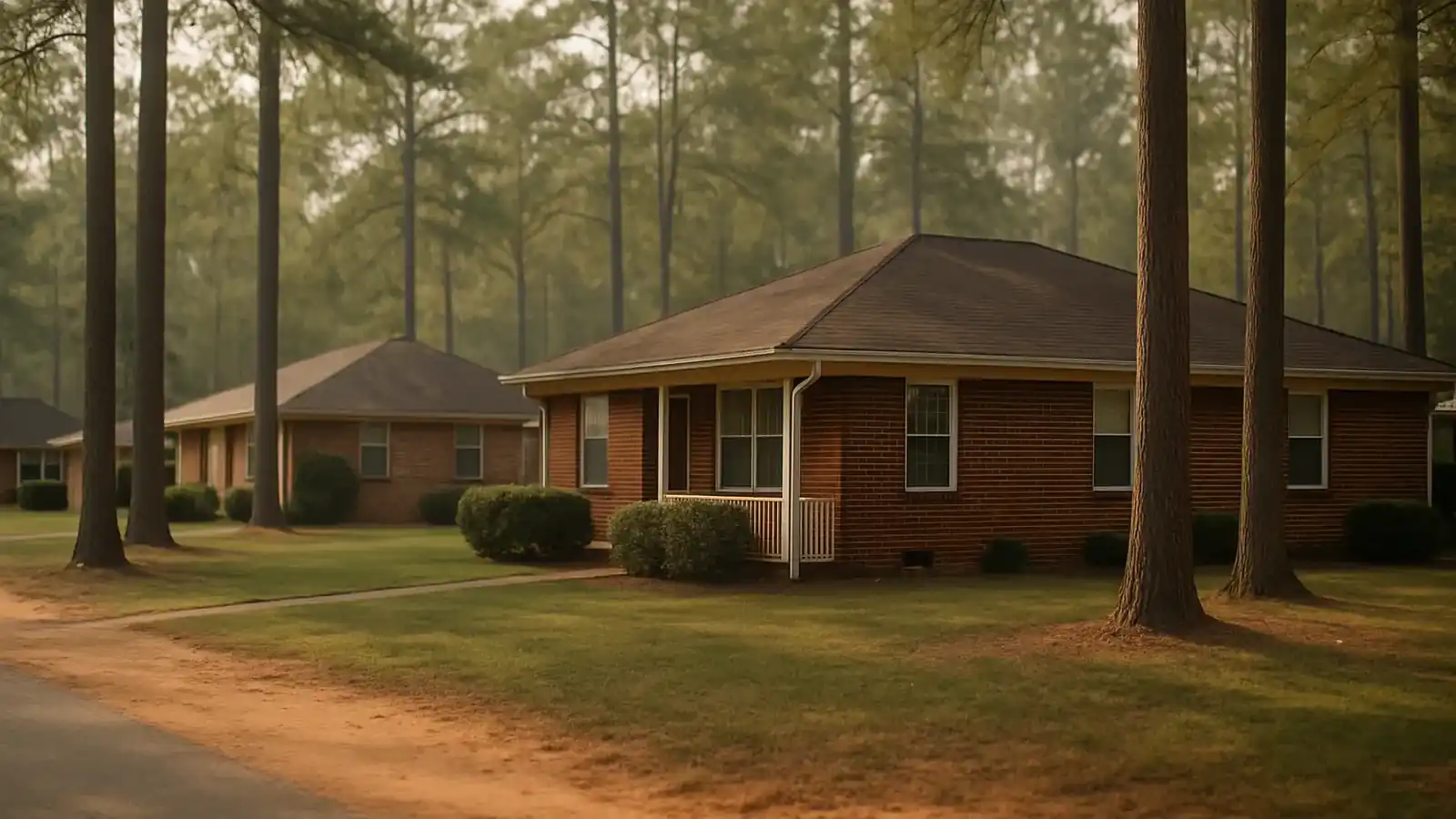
Vapor barrier installation in Columbus costs $1,500–$4,000 for a reinforced 12–20 mil liner sealed at seams and piers. Columbus runs a long cooling season, so the ground under your floor never stops giving off moisture.
What fall-line ground actually does under a house, what a sealed install includes, and the case for stopping at this tier.
Two different grounds, one fall line
Columbus sits where the Piedmont drops to the coastal plain, and the ground under a crawl space changes with it. Up on the red clay, water leaves slowly and keeps giving it back for weeks after rain. Down toward the river the soil drains faster but sits closer to the water table, so the supply is shallower instead of slower. Either way the direction is the same: bare soil evaporates upward into the joists, all day, all year.
What makes this market different is the calendar rather than the rainfall. Roughly 47–48 inches a year is unremarkable in the Southeast. Nine months of cooling season is not. The ground here never gets the winter pause that shuts evaporation down further north, so the load on your framing is close to continuous, and the sealed layer is the only thing that interrupts it at the source.
Why the termite zone changes the detailing
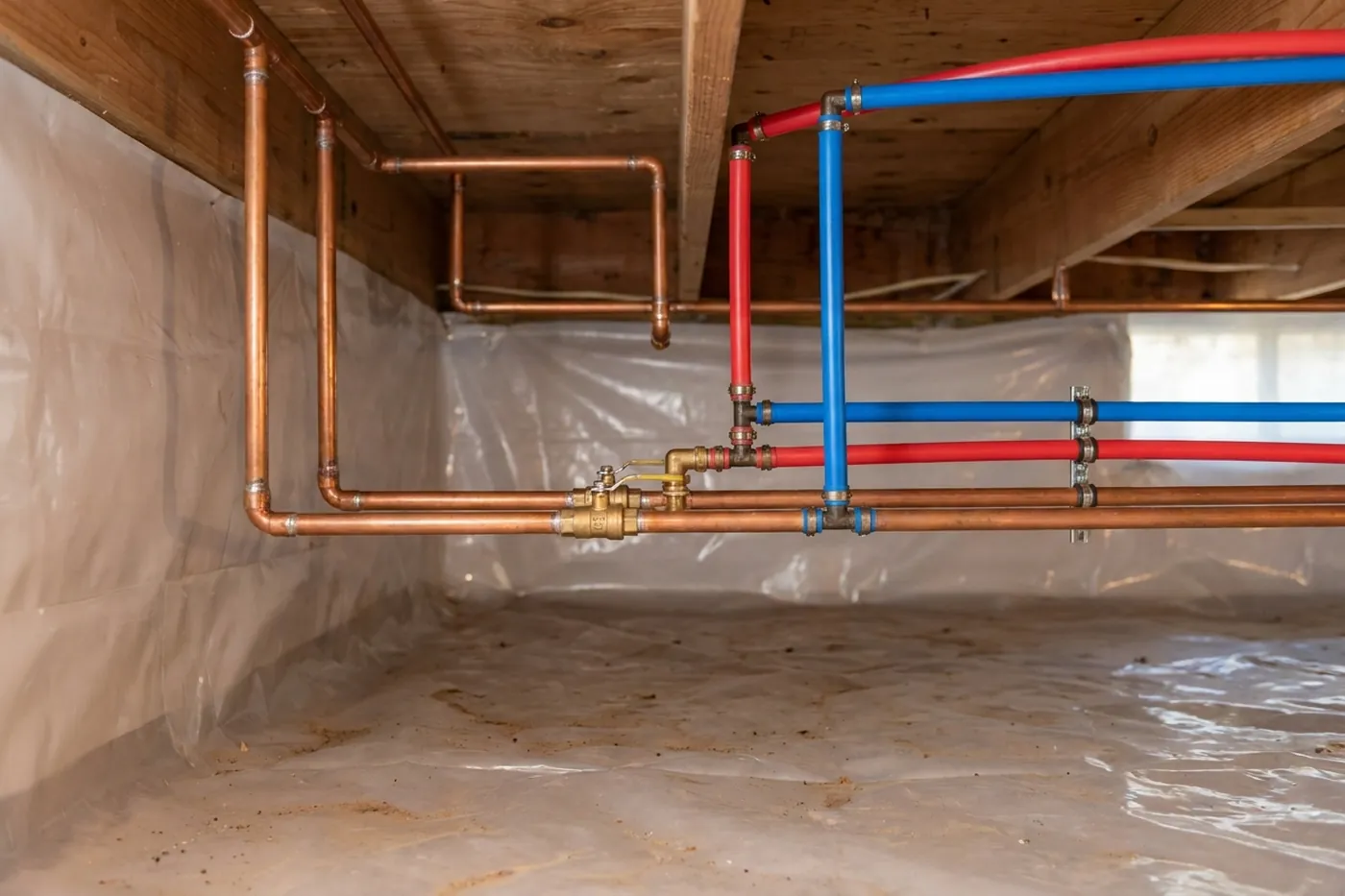
Georgia and Alabama sit in the heaviest termite-probability zone the IRC maps, and that has a practical consequence for how a liner gets installed rather than whether one should be. Damp wood is what draws them; drying the crawl removes the invitation. But a liner run carelessly up a pier hides the very surface an inspector needs to read.
- Reinforced 12–20 mil liner: survives decades of service traffic
- Piers wrapped, not buried: the inspection band stays visible
- Ground prepped: debris and sharp rock cleared before a panel lays
- Seams overlapped and taped full length: a seal, not a loose lay
- Penetrations closed, finished layer photographed
Installation day
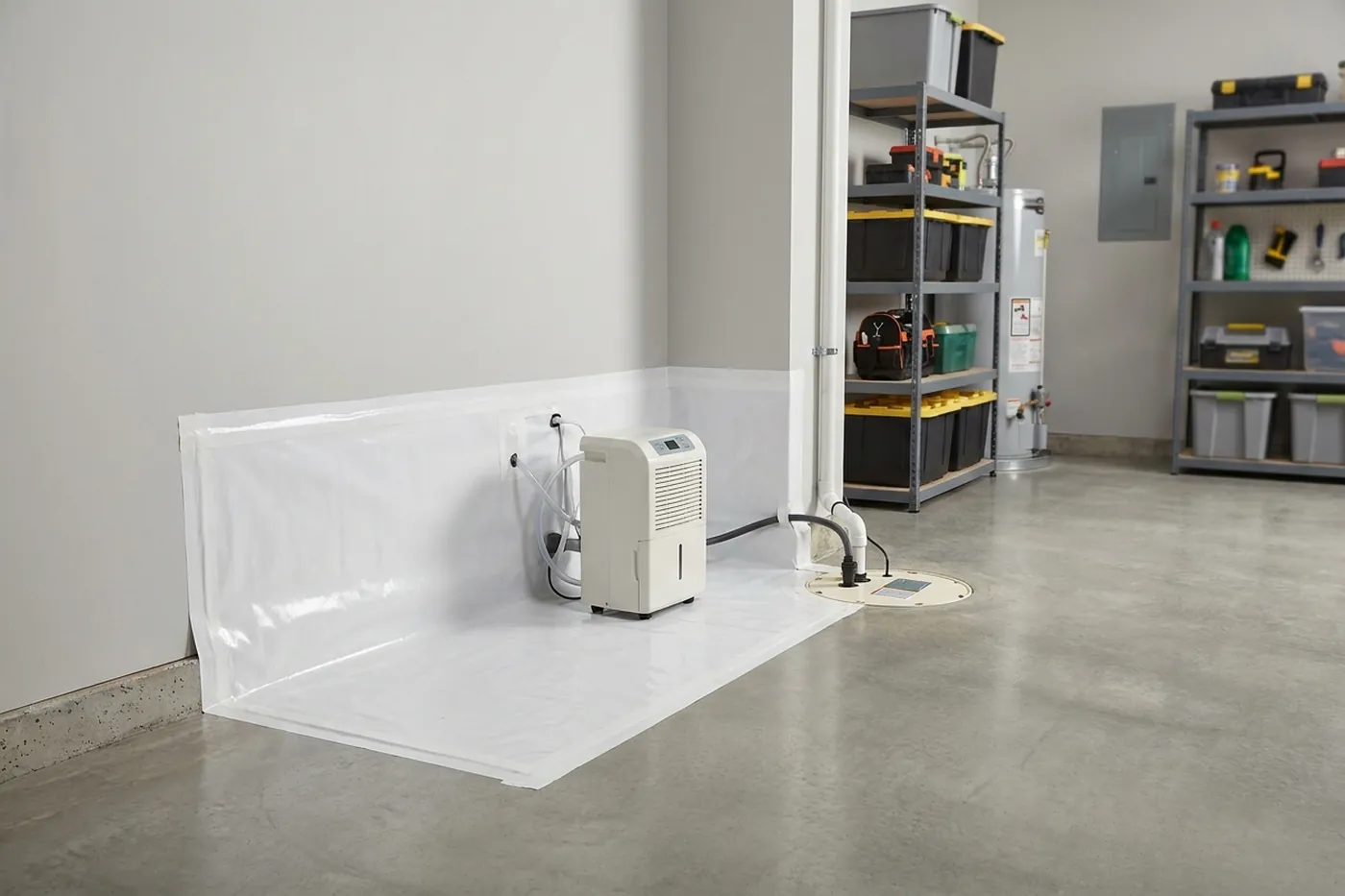
- Ground prep: debris, failed sheeting and sharp rock cleared, surface raked
- Layout: panels cut oversized so every seam overlaps generously
- Fastening: mechanical attachment at walls and each pier
- Sealing: seams taped, piers wrapped to the inspection band, penetrations closed
- Photos: the finished layer documented before the crew leaves
One crew, one day for most metro crawls. Low clearances and tight pier fields run longer, and the quote should say so before work starts rather than after. The finished surface is walkable, which matters more here than it sounds: a crawl nobody can cross is a crawl nobody inspects.
What changes upstairs
An uncovered crawl floor can put gallons of water a day into the air under your house. Sealing it drops the load the floor system absorbs and the load your air conditioning spends the summer removing, and it shows up as drier subfloor readings within a few weeks.
It will not stop humid outside air condensing on cool surfaces once it is through the vents. That is the sealed system's job. What the barrier removes is the supply that runs regardless of the weather.
When this tier is enough
Newer construction north of town (Fortson, Midland, the growth corridors) often needs this layer and nothing else. Good clearance, no storm-water history, readings that behave. A good specialist will say so, and the quote should match what the meter said.
The crawls that need more are usually the older ones: mill-village housing and the mid-century ranch belt, where low clearance and decades of patchwork add up. Around Fort Moore the pattern is different again: rental turnover means crawls that genuinely have not been opened in years. Ask to see the readings and the photographs before you see a bigger number.
Which barrier does this crawl space need?
Barriers get sold by thickness, which is the least interesting thing about them. What matters is coverage, sealing, and whether the ground underneath is dry enough to cover.
| Option | What it does | What this market demands of it |
|---|---|---|
| Light poly, ground only | Basic evaporation control, loosely laid | Better than nothing and not much better: humid air still reaches the framing |
| Class I barrier, sealed | Seams and edges sealed to the walls and piers | Georgia's code basis calls for a Class I barrier with a drying mechanism |
| Full encapsulation | Barrier up the walls, sealed, with humidity control | The full answer in a long humid cooling season |
| Barrier over wet ground | A liner laid on ground that still takes water | Traps water at the fall line where groundwater varies over short distances |
A sealed barrier also makes termite inspection easier rather than harder, provided inspection gaps are left at the piers where the code expects them.
Frequently asked questions
What does a vapor barrier cost installed in Columbus?
$1,500–$4,000 for a reinforced 12–20 mil liner sealed at seams and piers across most metro crawls. It is also stage one of full encapsulation, so nothing is wasted if the crawl is upgraded later.
Does red clay really give off that much moisture?
Steadily, and for far longer after rain than sandier ground does. Clay releases water slowly, which is why a crawl over Piedmont soil can read damp a fortnight after the last storm. The barrier interrupts that at the source.
Will the liner hide termite damage?
Not if it is detailed properly. Piers get wrapped to below the inspection band, not buried, so the surface a termite inspector reads stays visible. Drying the crawl also removes the damp wood that attracts them.
Is the old plastic under my house doing anything?
Loose 6-mil sheeting blocks a fraction of the vapour and fails wherever it gaps, tears or stops short of a pier. The upgrade to a sealed reinforced layer is the difference between a gesture and a system.
Get a Columbus crawl space inspection
Tell us what you're noticing (smells, humidity, floor bounce, a wet crawl) and we'll pass your request to one independent local specialist who serves Columbus. They call you back to set up an inspection.